

Ensuring Your Security
The level of security depends on the strict selection of personnel.
The reliability and honesty of individuals working in government or commercial structures are important factors in ensuring security. In this process, the polygraph plays a significant role, including its preventive effect, which encourages candidates to answer honestly and helps uncover important, yet undocumented, facts in their biographies.
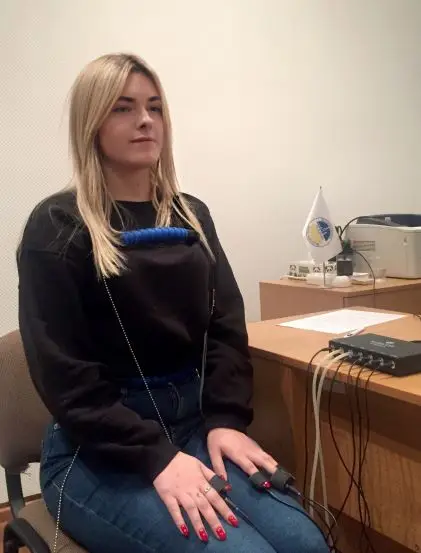
We Use Polygraph
Polygraph for Business:
- Polygraph testing helps businesses reduce risks by identifying negative actions of employees.
- Ability to screen job candidates, personnel, and top management.
- Detection of violations of internal rules, theft, disclosure of confidential information, and other infractions.
Polygraph for Crime Investigation:
- Polygraph can assist in investigating various crimes, including theft and fraud.
- Identification of facts related to document forgery and other crimes.
Polygraph for Personal Matters:
- Risks within the immediate environment, including dependencies and infidelities.
- Checking security and connections with competitors and law enforcement agencies.
- Detection of thefts and dependencies.
Frequently Asked Questions
Let's consider the answers to the most common questions that arise for the clients of investigations and for the subject of the investigation itself. Can a polygraph be deceived? This and much more we will discuss.
A rather popular and logical question: "Is it possible to deceive a lie detector?". Yes, it is possible to deceive a polygraph, but only if the test is conducted by a not very professional "specialist" or it is simply an attempt to "make a deal" with the examiner. A lie detector has no intellect and only registers and displays various indicators of the psychophysiological activity of the subject's body, so the main thing is to record them correctly and provide an analysis.
And is it possible to make a mistake in evaluating the test results on a "lie detector"? Yes, it is partially possible. A specialist - a polygraph examiner, like an ordinary person, is prone to doubts. Therefore, maximum objectivity and experience are important qualities of a professional in the field of "lie detection".
There are currently existing technologies that allow the elimination of most subjective factors during an investigation, both from the side of the specialist's "morality" peculiarities and from the side of possible types of countermeasures by the person being tested.
Actually, it is impossible to outsmart, deceive, or mislead the polygraph itself, since it is a machine that executes clearly defined algorithms.
A polygraph is a very complex and sensitive device. Known modern polygraphs register up to seven psychophysiological parameters simultaneously, which change reflexively, thereby ensuring the highest possible accuracy of results.
Errors in a lie detector test are errors not of the device, but exclusively of the polygraph examiner. Only insufficient qualification can actually lead to "incorrect" results.
An experienced specialist cannot be misled by "specially trained people," medications, or other "folk remedies."
Currently, all the methods and advice contained on the Internet for countering polygraph tests are widely known: lack of sleep, meditation, self-inflicted pain, lots of coffee or sedatives – for all these countermeasures, there are appropriate methods for their detection, and if a polygraph examiner detects such countermeasures, he clearly indicates this in the expert report, and the client of the investigation, in turn, makes appropriate decisions regarding the person who counteracted the investigation.
In practice, there are no results with a 99.9% reliability rate – this is just a marketing ploy by some polygraph examiners who want to get an order at any cost. The real, honest percentage of result reliability ranges from 80% to 95%. In each individual case, the polygraph examiner studies the client's situation in detail and creates an individual test system, without using outdated templates.
Answers can be given to such unambiguous questions:
- Does he/she know where the stolen items are?
- Did he/she steal money from the safe?
- Did he/she participate in fraud, murder?
- Did he/she receive kickbacks from suppliers?
- Did he/she have sexual relations with others during marriage?
- Was he/she gathering compromising information on the owner or the company?
- Did he/she disclose confidential information to others?
Questions that should not be asked:
- Does he love me?
- Will he behave properly in the future?
- Will he organize a fraudulent scheme in the future?
The test lasts up to two hours, and it is simply impossible to ask more than 200 questions during this time. A test duration of more than two hours is not allowed because the person gets tired, and adaptation leads to a lack of informative reactions.
To get an answer to one question, the polygraph examiner is obliged to use a whole range of methodological techniques to achieve the most reliable result. An exception may be screening personnel checks, during which there may be more than five questions, but no more than 8-10.
In each case, after studying the situation, the polygraph examiner will suggest the optimal number of questions with the most correct wording.
Testing for spouses or relatives is becoming increasingly popular and makes it possible to learn about various facts of life together, for example, whether there was marital infidelity or other deception.
1. Full confidentiality. The polygraph examiner immediately undertakes not to disclose the materials of the survey and the results obtained.
2. Accuracy and data verification. The accuracy of testing and the results obtained on the detector is about 80%, and if necessary, a repeat test can be conducted.
3. Expertise. The lie detector test is conducted only by a specialist or expert.
The first argument in favor of the lie detector is that it can identify candidates who hide criminal records, have experience in breaking the law, a propensity for offenses, or conceal harmful habits. An experienced polygraph examiner will, if necessary, detect attempts to lie or avoid unpleasant topics. But it should be considered that there are no completely ideal people, and any obtained "primary information" must be additionally clarified. Suppose during an interview the question was asked: "Have you ever misappropriated company property during your work?" Many people would be forced to answer "yes": perhaps someone took a pen from work, someone took documents home to work in the evening, and along with them a folder-organizer, which they simply forgot to return. Such cases fall under the definition of temporarily "misappropriated company property," but they cannot be an obstacle to employment.
This is precisely why the use of a polygraph during personnel selection will help the employer find out the details that a candidate for a vacancy or a working employee prefers to conceal. In the described case, an experienced polygraph examiner will introduce a limitation: "Did you ever intentionally misappropriate company property?" And will add, for example, a clarifying question: "Was it worth over 1000 hryvnias?" It is precisely such clarifying questions and the ability to interpret them correctly, and analyze the polygraph test results, that allow making a reasoned decision regarding the candidate.
The second main purpose of a polygraph test is to demonstrate the company's "work style" to the candidate. The polygraph is a symbol of a tough fight against lies and a symbol of transparent cooperation. Thus, already at the interview, the organization shows the future employee that completely legal employment and honest work with transparent pay await them here. By creating such an image of the organization, the HR specialist forms a positive motivation for work in the employee, of course, if the impression of the polygraph is reinforced positively. It is important to inform the new candidate that all employees of the company, including management, regularly undergo testing, and this emphasis on team unity is very important. If the testing causes undesirable stress in the candidate, switch their attention to the fact that such detector checks give the company confidence in each employee's loyalty, and this allows the company to show reciprocal loyalty. It is important to emphasize the good attitude towards every worker and the high trust in them. In an unusual situation, a person opens up and demonstrates their qualities, and therefore the polygraph testing process can well become part of the interview. However, the main thing is that the interpretation of the results is handled by an experienced polygraph examiner and an HR specialist. According to statistics, 90% of the testing effectiveness depends not on the equipment, but on the qualification of the specialists working with it.